
This article was originally written on February 19, 2016.
Never have I seen so much love for a traditional ruler in my life. Never!
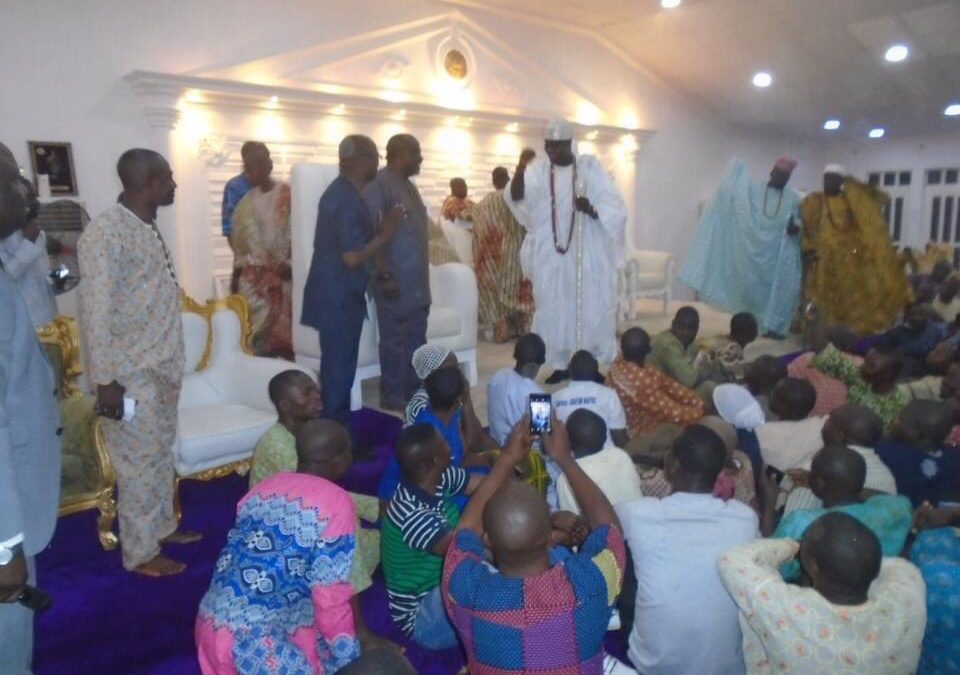
As His Imperial Majesty alighted from his vehicle and entered the Royal Hall within the expansive palace grounds called ‘Ile Oodua’, the crowd surged after him. They struggled as some squeezed themselves between the doors so they could get closer to the Ooni, Oba Enitan Ogunwusi.
It was something similar to people surging after a popular TV evangelist at an open-air crusade. The only difference was that they didn’t touch him. They couldn’t dare. He walked with such imperial majesty. His gait was measured. It was like he had rehearsed for this moment all his life. He was surrounded by the ‘Emeses’—about five of them—who dressed in well-starched ‘agbada’ made from what looked like ‘adire’ local fabric. One Emese called ‘Sarun’ particularly looked barrel-chested. I guess he is the leader.
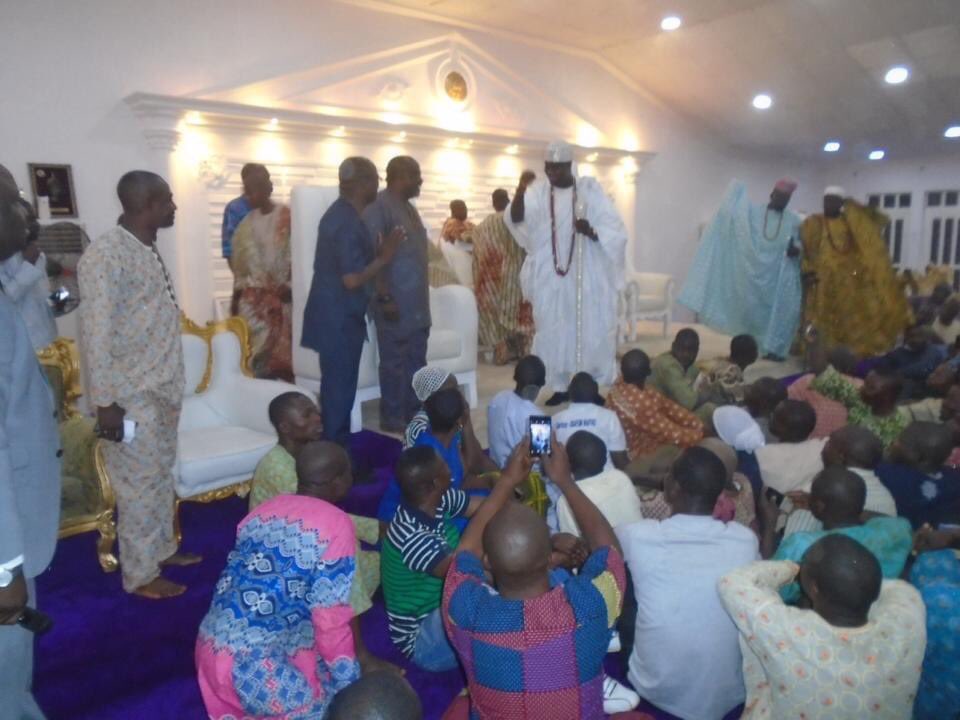
The Ooni sat on his seat as the people—now numbering close to 2,000—sat on the floor. I had arrived at the Royal Hall very early and had been allowed to enter with my team. That gave me the opportunity to assess the hall and even take a few pictures. I saw pictures of previous Oonis hung on the wall. I took particular notice of Ooni Adesoji Aderemi and Ooni Okunade Sijuwade. There was a particular picture of the previous Ooni Sijuwade when he was much younger, looking very dapper. He certainly had ‘swag’.
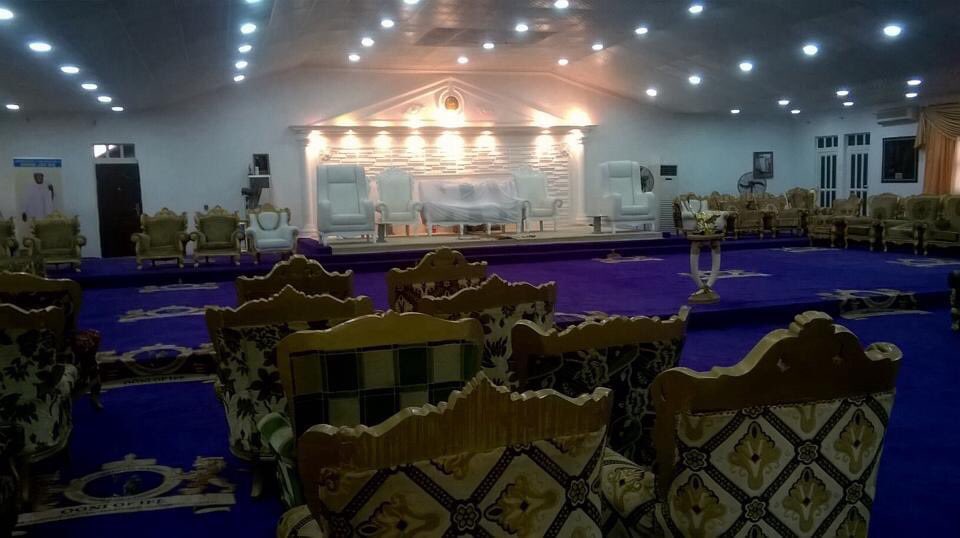
I have come to believe that one of the major requirements for being an Ooni is ‘swag’. And you just have to see the purple rug all over the Royal Hall. The purple rug had the crest of the Ooni boldly imprinted at various areas on it. The crest consists of two lions holding a shield with a crown at the top, with the Ooni holding his staff inset. Written around the shield are the words “His Imperial Majesty, Arole Oduduwa, Ooni of Ife, Oba Adeyeye Enitan Babatunde Ogunwusi, Ojaja II”.
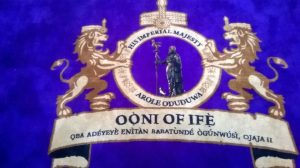
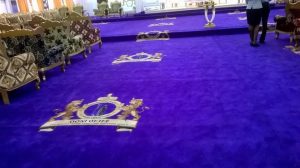
The names had the Yoruba tonal marks. The chairs within the hall smelt of royalty and looked royal. The ceiling of the hall had numerous lights. The walls were painted glossy white. And on the elevated platform were chairs of different sizes, one of which had a white cloth spread on it. Right on the floor in front of the chair, which had a white cloth, was spread a tiger skin. It was a real tiger skin. I learnt the hall was quickly renovated when Ooni Ogunwusi ascended the throne. Everywhere looked squeakily clean and brand new.
What happens when a traditional ruler walks into a hall and thousands of people respond with genuine excitement and affection? I experienced it firsthand with the Ooni of Ife. Share on X“Ẹ sún mọ́ mi. È̩yin lẹ ni ààfin” (Come nearer to me; you are the real owners of the palace), Oba Ogunwusi said. The people rose up and came nearer. “E ku ojumo o. Aye yin a daa o” (Good morning, you will all be blessed), he prayed. “Ase e” (Amen), the people chorused.
He then asked people to pray silently. In his words, “B’onigbagbo ni e ni, gba adura re sinu. Bo je Musulumi, gba adura re sinu. Bo ba je elesin abalaye, gba adura re sinu” (If you’re a Christian, Muslim or traditional worshipper, observe silent prayers).
Everywhere was quiet as people prayed silently. After a minute, the King broke out into a song:
Ise agbe, ni se ile wa (Farming is our traditional vocation).
Eni ko si se, a ma jale (The person who doesn’t work will steal)
Iwe kiko, lai si oko (Education without farming)
Ati ada, ko i pe o, ko i pe o (Is incomplete)
(A song to encourage people to farm).
Everyone joined in the song as he sang it twice. The whole auditorium looked like a big orchestra as voices boomed. The King has such a baritone and velvety voice. If he were not King, he would make a good R&B singer after the order of Barry White or Teddy Pendergrass. Do they teach them how to sing as Kings?
It was a meeting with farmers in Ile-Ife, and the Ooni had invited me to address them. He spoke about how Ife is blessed with landmass in Osun State. He spoke in impeccable Yoruba. The crowd shouted, “Kaabiyesi o” and “O ti see se” (It is done already) as he addressed the crowd.
“Gbogbo awa Omo Ife, afuniso ni wa. Awa ko la ni Ife. Gbogbo agba laye lo ni Ife tori orisun gbogbo agba laye ni Ife.” (All indigenes of Ife are actually stewards of Ife. Ife belongs to all because it is the Source), he said.
He then led another song:
Ara o gbodo ni mi (I must not suffer pain)
Emi o gbodo ni inira (I must not suffer troubles or distress)
Iran Ogede i sunkun a ti de (Plantains don’t suffer as they get tender)
Ara o gbodo ni mi o (I must not suffer pain).
As if on cue, the people rose up and started singing in return:
Ta lo so pe a o ni baba (Who says we don’t have a father?)
Kai, a ni baba (Never say that again—we have a father)
Ogunwusi baba wa (Ogunwusi is our father)
I joined them in singing the song. I just couldn’t resist it. Almost immediately after, the King recognised the head of the farmers whose nickname was Benbella. But he did it in a singing “call and response” manner. He shouted, “Ben be o!” to which the crowd responded, “Ben Bella!” Benbella, dressed in a blue kaftan, rose up to acknowledge the recognition.
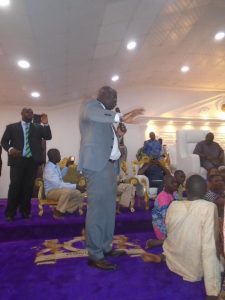
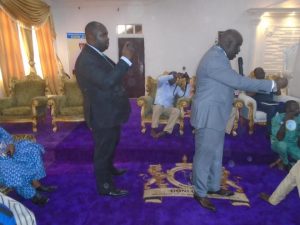
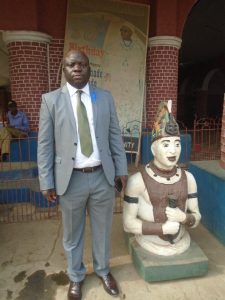
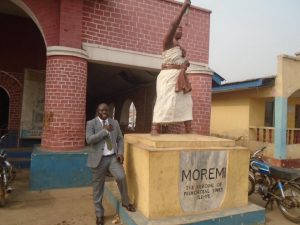
A short while later, the Ooni asked me to address the crowd, which I also did in impeccable Yoruba. I couldn’t address them in English after His Imperial Majesty had done so in our native tongue. After the whole event, I took some pictures with the palace chiefs and took a tour of the expansive palace grounds. I saw the statue dedicated to Moremi, the female warrior. I also saw another statue of the “Ori Olokun”.
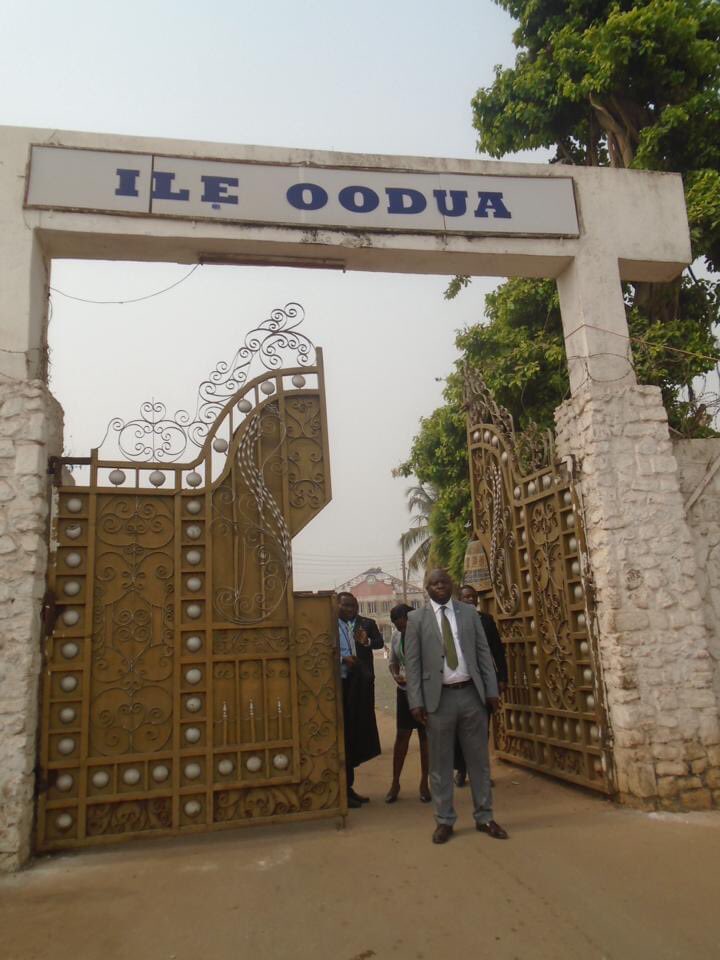
And then I saw a particular spot close to a place labelled “Emese” where there was a stone drenched in palm oil. I couldn’t take the picture because the Emeses stared at me. An indigene would later explain to me that that was where knotty issues were resolved and oaths were taken. If anyone lied under oath at that particular point, the person would not live beyond seven days. I looked around and saw construction works going on within the palace grounds.
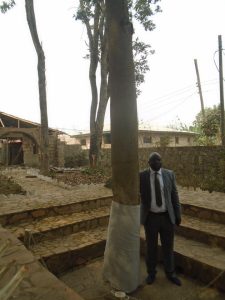
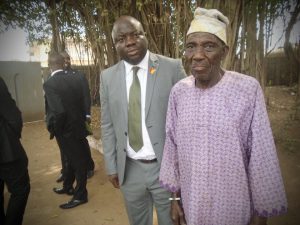
A short while after, I was on my way to see the “Opa Oranmiyan”. I had heard so much about it but had never seen it up to that time. The Opa Oranmiyan was in an enclosed building dotted by huge trees. As we entered the premises through the gate, I was introduced to the elderly caretaker who identified himself as a direct descendant of Oranmiyan. He told me that Emeses are descendants of Oranmiyan. He told me Oranmiyan was the grandson of Oduduwa and was a great warrior.
He told me the Opa was actually Oranmiyan’s walking stick. He described Oranmiyan as being an “omiran”—a giant. He told me about the wars and how Oranmiyan went to Benin at a time. I was regaled with the story of how Oranmiyan said he wanted to rest and entered his house—only to come out no more—until a time when his wife wanted to see him and shouted that there was war when there wasn’t any war. farmer blessings
Oranmiyan came out and started beheading people until he was told he was actually killing his people. In annoyance, he dropped his walking stick at that point where the Opa Oranmiyan is and it entered the ground. He then entered the house again and hasn’t come out since. He pointed at the house, which was at a distance and said no one could go there except direct descendants of Oranmiyan. I could see the pathway was lined with trees. The Baba claimed Oranmiyan was still in the house. I took some pictures with the Baba and Opa Oranmiyan.
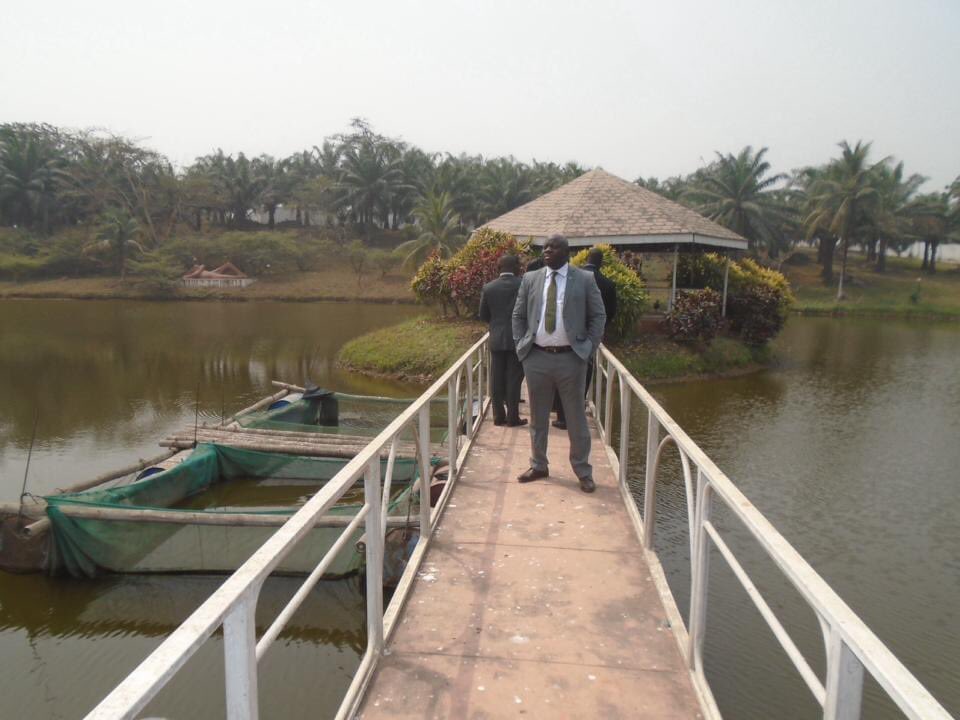
One’s visit to Ife is never complete until you visit the house of Henry Alex Duduyemi. That massive structure is a tourist’s delight anytime. Have you seen any private property in Nigeria with a natural lake enclosed? I saw one at Ife. Chief Duduyemi even built a bridge across it. There were relics of speedboats on the lake. The compound was expansive with manicured horticulture. Ile-Ife can become a major tourist centre in Nigeria. Oba Ogunwusi has what it takes to make it so.