
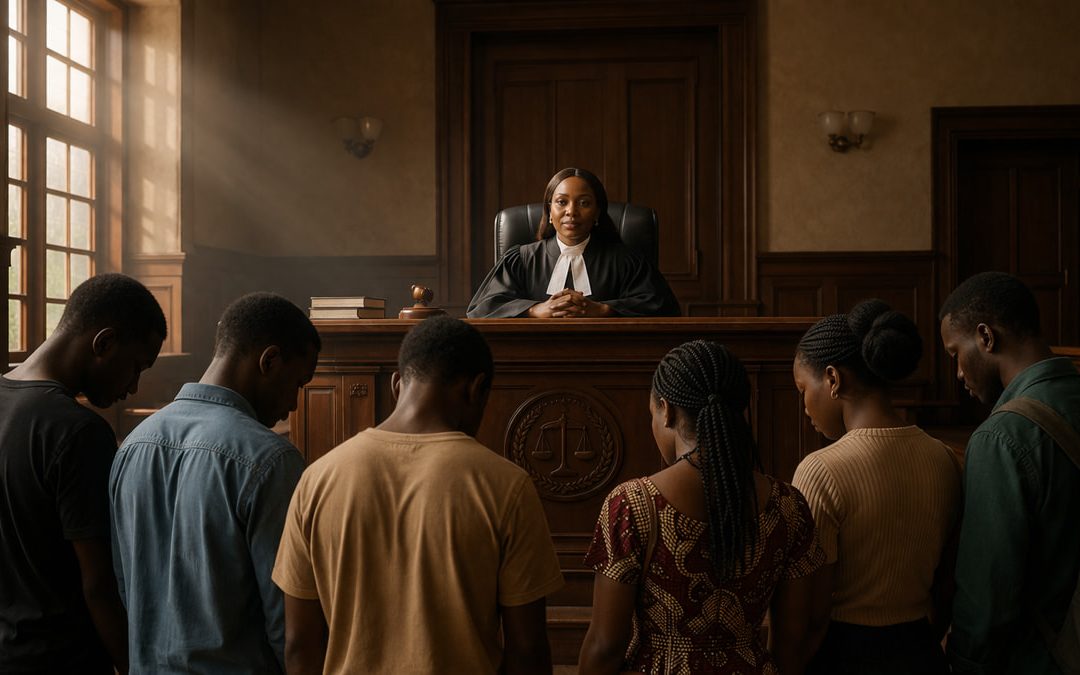
I still remember the incident very clearly. I was the President of the Students’ Union Government that year. We had a coaster bus then called ‘Aluta Missiles’. On that particular day, the General Secretary of the Union (now a professor at a university) drove the bus while I sat beside him. We were going for a students’ engagement.
We passed through a place called High Court in Ogbomoso. The location took its name from the presence of the High Court in that vicinity. Those days, we were usually loud and always announced our presence wherever we were. On that day, we did so by honking — the type you do when you just want to either draw attention to yourself or become a public nuisance. It was loud and very persistent.
What is sacred should never become common, or it will lose its meaning. Share on XThe next thing we saw was policemen surrounding our bus. We got ready for aluta but saw that the police asked us to come down and turn off our engine. The leader then approached me and said the judge wanted us in the court. The judge, a woman who later became the Chief Judge of Oyo State, had ordered our arrest. We didn’t know the court was in session.
We were led into the court where we pleaded with the judge that we were students and didn’t know the court was in session. We were very remorseful seeing the situation. A senior lawyer who recognised me also pleaded on our behalf. The judge gave us a lecture on the sanctity of the courts and how it was a hallowed temple that should be respected by all and sundry. She let us off after the warning. We became very close to her subsequently and she was like a mother to us.
It is very important that we uphold the sanctity of what stands as the icon of justice. What is sacred should never become common lest it loses its reverence, awe and respect. A temple of justice should never be a place for press or media release. If the sanctity is not upheld, very soon skit-makers will invade the place.
What we honor, we preserve. What we trivialise, we eventually lose. Share on XThis is the same reason I disagree with the use of the altar for comedy or entertainment. Once the sacred loses its awe, it loses its power and potency in the minds of people. People become over-familiar with the institution and we trade consecration for convenience. What should be revered will subsequently be mocked and treated casually. There are certain things that don’t need to be in the rule books. By convention, they are universally agreed.
A court is sacred. It should never be desecrated.